

From Tradition to Tassyam: A Family Story of Hing
Share
Hing was never a trend in our family.
It was a staple. A necessity. A non-negotiable.
Long before Tassyam Hing existed as a brand, hing existed as knowledge passed down quietly. Used sparingly. Chosen carefully. Respected deeply.
This is the story of how that legacy became Tassyam.
The History of Hing. And Why It Matters.
The history of hing is older than Indian kitchens. Originally sourced from the sap of Ferula plants in present-day Afghanistan and Iran, hing travelled along ancient trade routes into India. It earned its place not for aroma alone, but for function.
- Digestive aid
- Anti-flatulent
- Flavour enhancer in vegetarian diets
- Essential in Jain and satvik cooking
Real hing was powerful. A pinhead was enough.
What most people consume today is not that.
Laxmi Chand. The Standard Bearer.
In our family, hing was defined by one name: Laxmi Chand.
He was not a marketer. Not a brand builder.
He was a trader who understood quality by smell, texture, and aftertaste.
- He rejected weak resins
- He avoided over-compounded blends
- He believed hing should disappear into food, not dominate it
For him, hing was judged after the meal, not before it.
That philosophy shaped everything we do today.
What Went Wrong With Modern Hing
Most commercial hing today is:
- Over-diluted
- Heavy on starch and gums
- Weak in aroma
- Inconsistent in performance
Why?
Because strong hing is expensive. And difficult.
The market optimized for price. Not integrity.
That gap is where Tassyam hing was born.
Hing, The Way It Was Meant To Be
What defines Tassyam hing today:
- Strong aroma, not harsh
- Clean finish, no bitterness
- Low quantity required
- Honest labelling
Whether compounded or crystal, every product exists to do one thing well:
Enhance food without announcing itself.
That was Laxmi Chand’s rule. We kept it.
Why This Story Matters
This is not just heritage branding.
It is a quality filter.
When you know where a product comes from, you know what shortcuts were not taken.
That is the difference between hing as a commodity and hing as a craft.
Explore the Legacy
Read the Founder’s Story
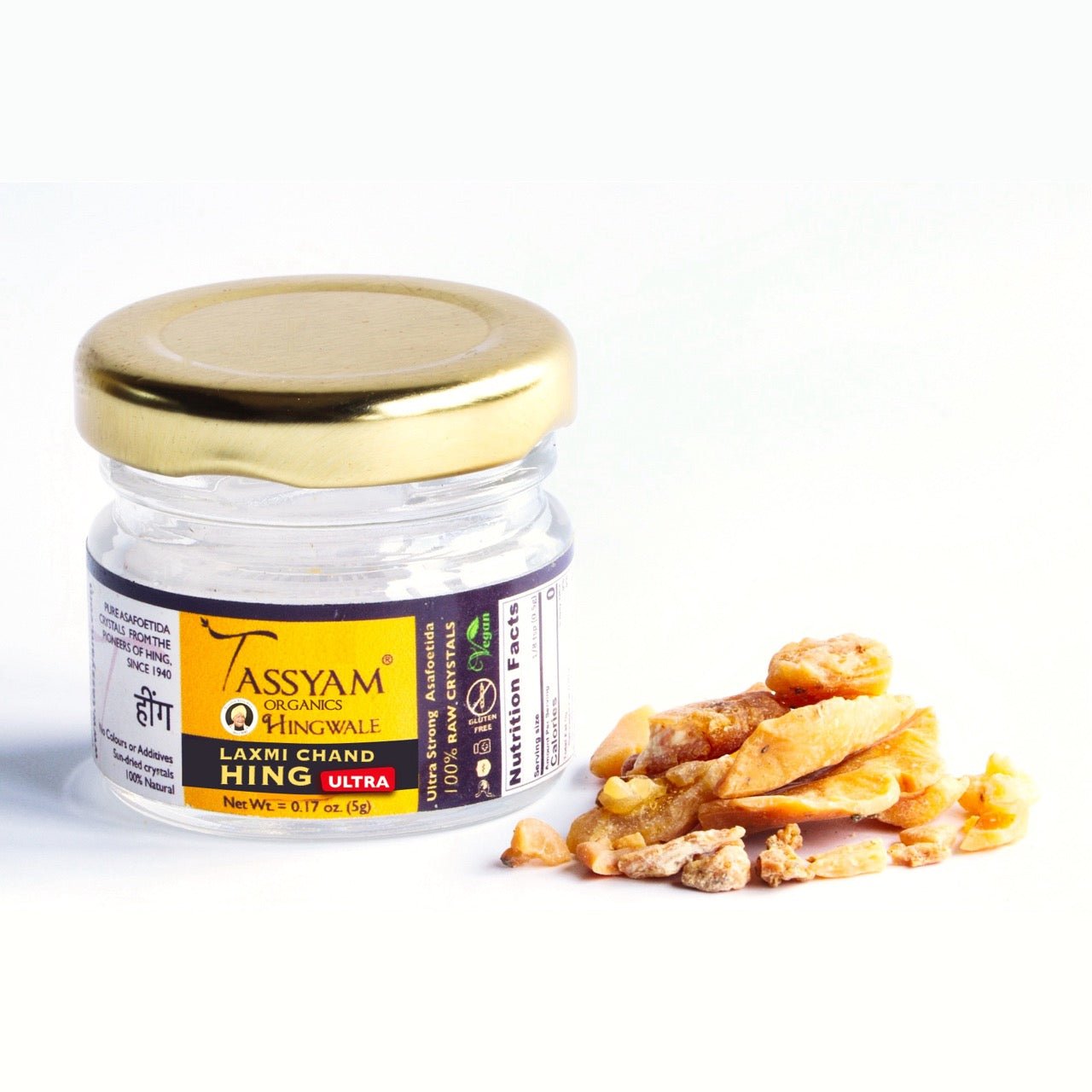
Explore the Laxmi Chand Hing Collection
Discover Tassyam Hing for Your Kitchen